by Clear Path Intervention
Share
by Clear Path Intervention
Share
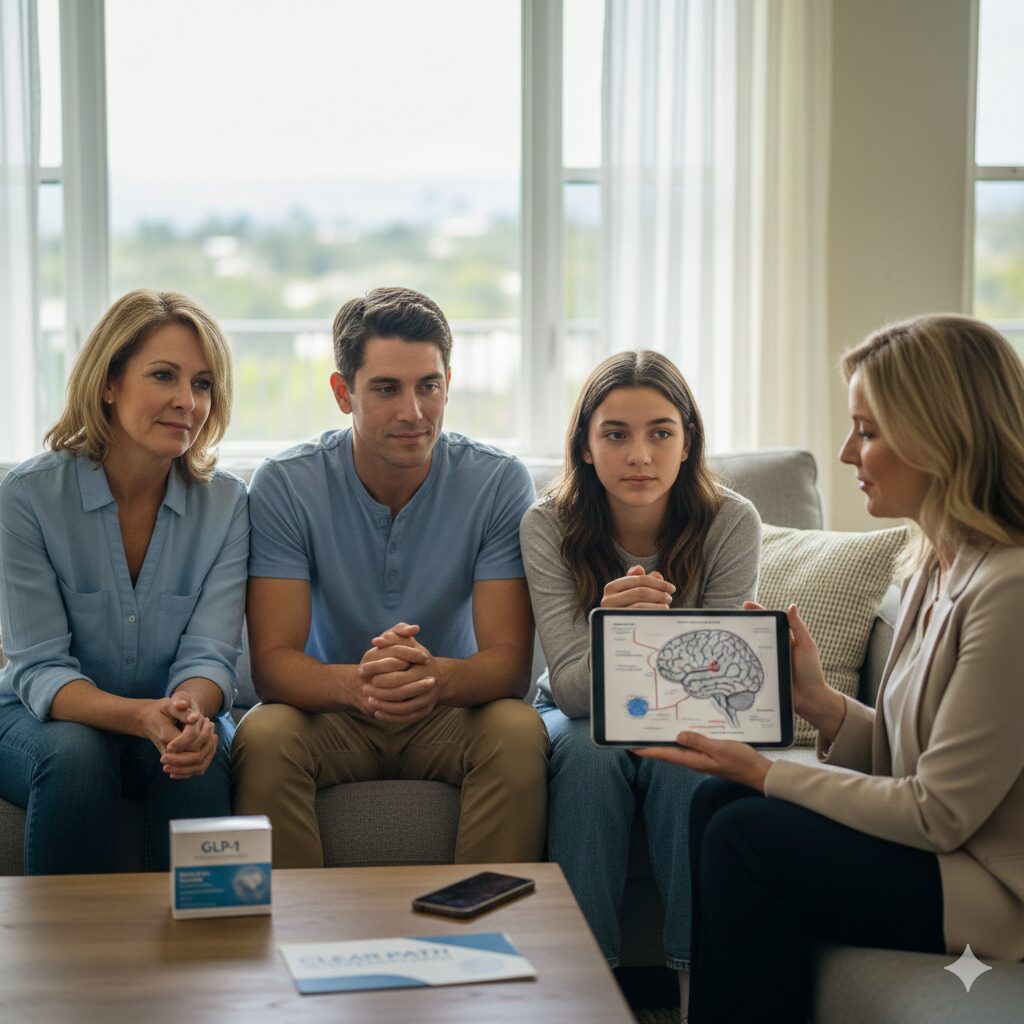
For decades, the standard approach to addiction was built on a foundation of “waiting for rock bottom.” Families were told to detach, wait for the call from jail or the hospital, and hope that “willpower” would eventually win the day.
But as we move into February 2026, the landscape has fundamentally shifted. We are witnessing a revolution in Neuro-Recovery where groundbreaking medications like GLP-1 agonists are merging with the timeless wisdom of Family Systems Theory.
At Clear Path Intervention, we believe that “rock bottom” is a dangerous myth. Our NCIP certified recovery coaches know that in an era of high-potency synthetics and a deeper understanding of brain chemistry, we no longer have to wait for the house to burn down before we call for help. Today, we have the tools to quiet the biological noise of addiction, allowing the family to find their voice, finally.
The Biology of the “Hijacked” Brain
To understand why a family intervention is necessary, we must first know what you are up against. Addiction is not a moral failing; in 2026, clinical science views it as a disease of the reward system, specifically involving the Default Mode Network (DMN) and the Mesolimbic Dopamine Pathway.
When a person struggles with Substance Use Disorder (SUD), their brain’s “thermostat” for pleasure is broken. Normal rewards a child’s graduation, a promotion, a family dinner no longer register. The brain has been recalibrated to only respond to the intense dopamine spikes of the substance.
This is why your loved one seems like a stranger. The person you know is still there, but they are trapped behind a wall of “incentive sensitization” a biological “wanting” that is more powerful than their love for you, their career, or even their own life.
The “Ozempic Effect”: A Biological Boundary
One of the most significant trends in 2026 is the emergence of GLP-1 medications (like semaglutide) as a secondary tool in addiction treatment. Recent clinical trials, such as the CRAVE study, have confirmed what we’ve suspected: these medications help “quiet” the brain.
How GLP-1s Work in Addiction:
-
Reducing Reward Sensitivity: These medications appear to dampen the dopamine “rush” associated with alcohol and certain drugs.
-
Quieting the “Drug Noise”: Just as they reduce obsessive thoughts about food, they help reduce the intrusive, constant “noise” of cravings.
-
A Window of Opportunity: We view these medications as a “Biological Boundary.” They don’t do the emotional work for the individual, but they lower the biological volume of the addiction so the individual can actually participate in their own recovery.
The Clear Path Perspective: A medication can help stabilize the brain, but it cannot repair a broken marriage or restore a sibling’s trust. The medication is the bridge; the Family System is the destination.
Why the “Family System” is the Real Solution
If addiction is a “hijacking” of the individual, it is a “paralysis” of the family. At Clear Path Intervention, we operate under the Family Systems Model. This theory posits that no person is an island; when one member of the system changes, the entire system adapts to accommodate that change.
Families often fall into roles without even realizing it. Understanding the family’s role in addiction recovery is the first step toward breaking these cycles:
-
The Enabler: Who protects the addict from the consequences of their actions.
-
The Hero: Who works twice as hard to keep the family looking “perfect.”
-
The Glass Child: The healthy sibling who becomes invisible because all the parental energy is consumed by the crisis.
The Power of the Non-Confrontational Intervention
Our approach rejects the “ambush” style of intervention. We use an Invitational Model where the family is coached to move as a unified front. By addressing the “system” rather than just the “addict,” we remove the shame that fuels denial.
Combined with modern tools like GLP-1 support, we create a path where the only logical choice left for the individual is help.
Navigating the 2026 Drug Landscape (Xylazine & Tianeptine)
The urgency of intervention has never been higher. In 2026, we are dealing with “Polysubstance Use” involving Xylazine (“Tranq”) and Tianeptine that traditional detoxes are struggling to manage.
For families, this means the “Wait and See” approach is no longer an option. The toxicity of modern street drugs means that “rock bottom” is often fatal. As a professional interventionist in California and across the nation, we act as your “Steady Hand” during this crisis. We coordinate with detox facilities that are equipped for 2026’s specific drug trends, ensuring your loved one is safely transitioned into a medical environment.
Moving Forward Your Clear Path
If you are reading this, you are likely exhausted. You have tried the arguments, the tears, and the “tough love” that didn’t feel very loving.
The good news is that the science of 2026 is on your side. Between the neurobiological breakthroughs in craving management and our proven approach, there is a way out of the fog. Understanding what happens after an intervention helps prepare for a smoother recovery process and sets realistic expectations for everyone involved.
What to do next:
-
Stop the Ambush: Don’t try to handle a crisis at 2 AM.
-
Educate the System: Bring the siblings, the parents, and the spouses together.
-
Utilize Support: Ensure a seamless transition with safe sober transport services to the chosen treatment program.
Recovery is a journey of a thousand miles, but it begins with a single, clear decision to stop fighting the battle alone.
HELP IS AVAILABLE
Do You Have a Loved One Struggling with Addiction or Mental Health Issues?
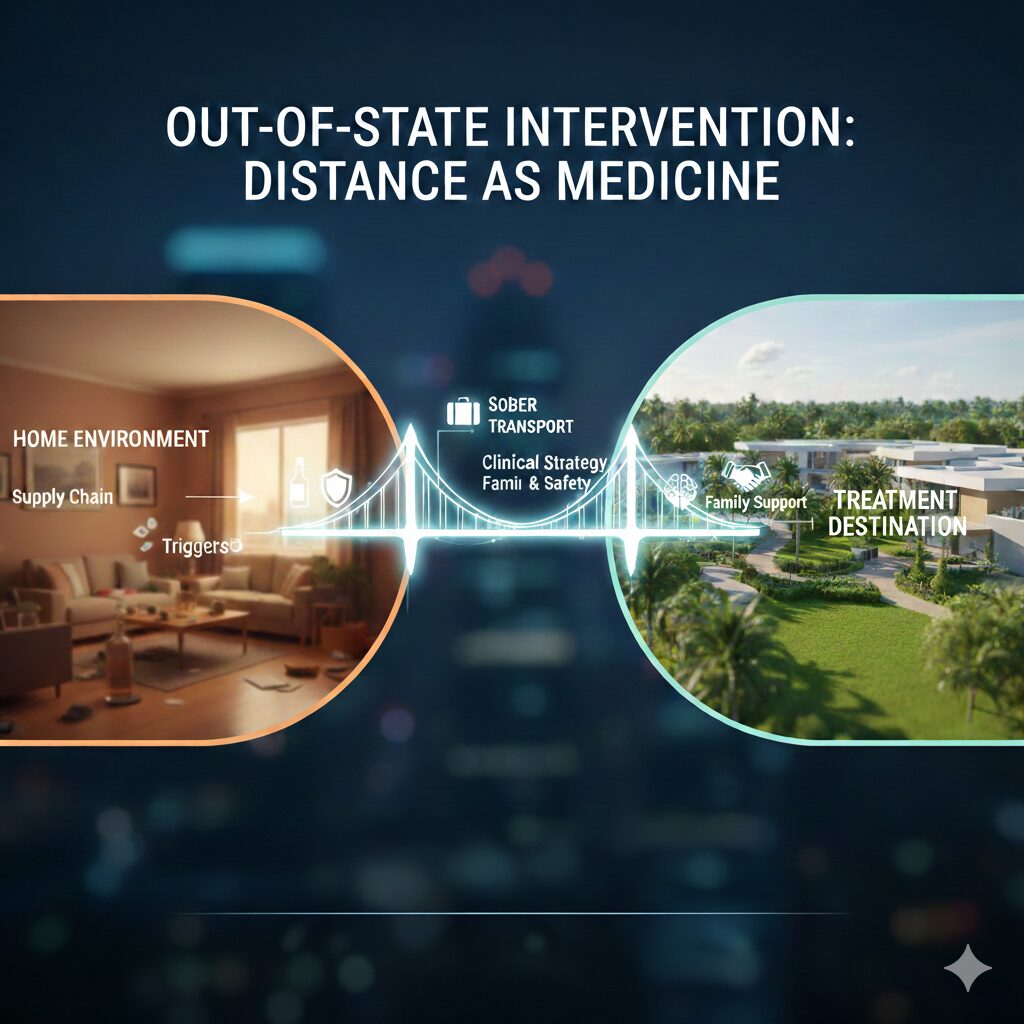
One of the most common questions we receive is: “Does the intervention have to happen where the treatment center is located?” The answer is a resounding no. In fact, in 2026, some of the most successful recoveries begin with an out-of-state intervention. At Clear Path Intervention, we specialize in the complex logistics of national interventions. […]
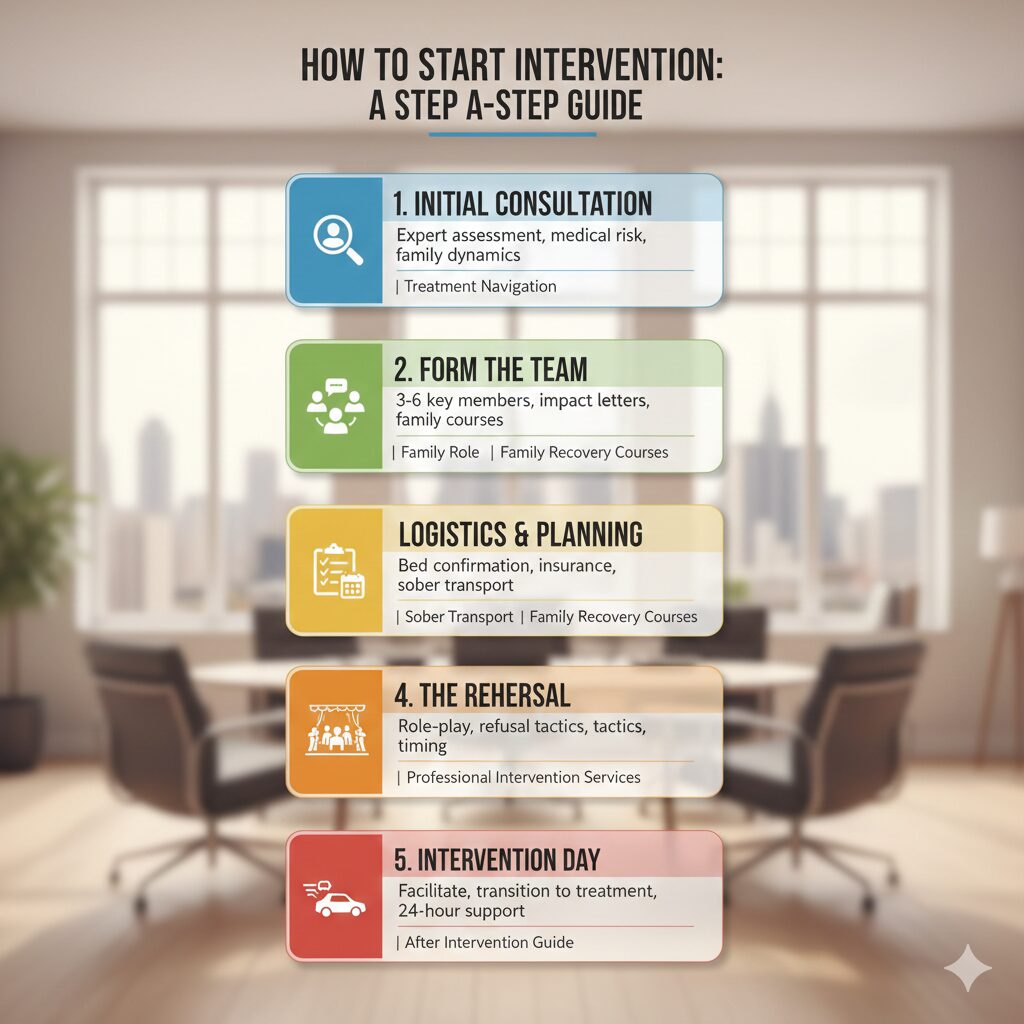
When the decision is finally made to help a loved one caught in the grips of addiction, the momentum is often high, but the “how-to” can feel overwhelmingly complex. You know they need help, and you know you can’t keep living like this but where do you actually begin? The path from crisis to recovery […]

One of the most profound barriers to seeking professional help for addiction is guilt. Families often feel like they are “sneaking behind a loved one’s back” or “plotting against them.” They worry that the intervention will be seen as a betrayal of trust, a permanent stain on their relationship that can never be washed away. […]
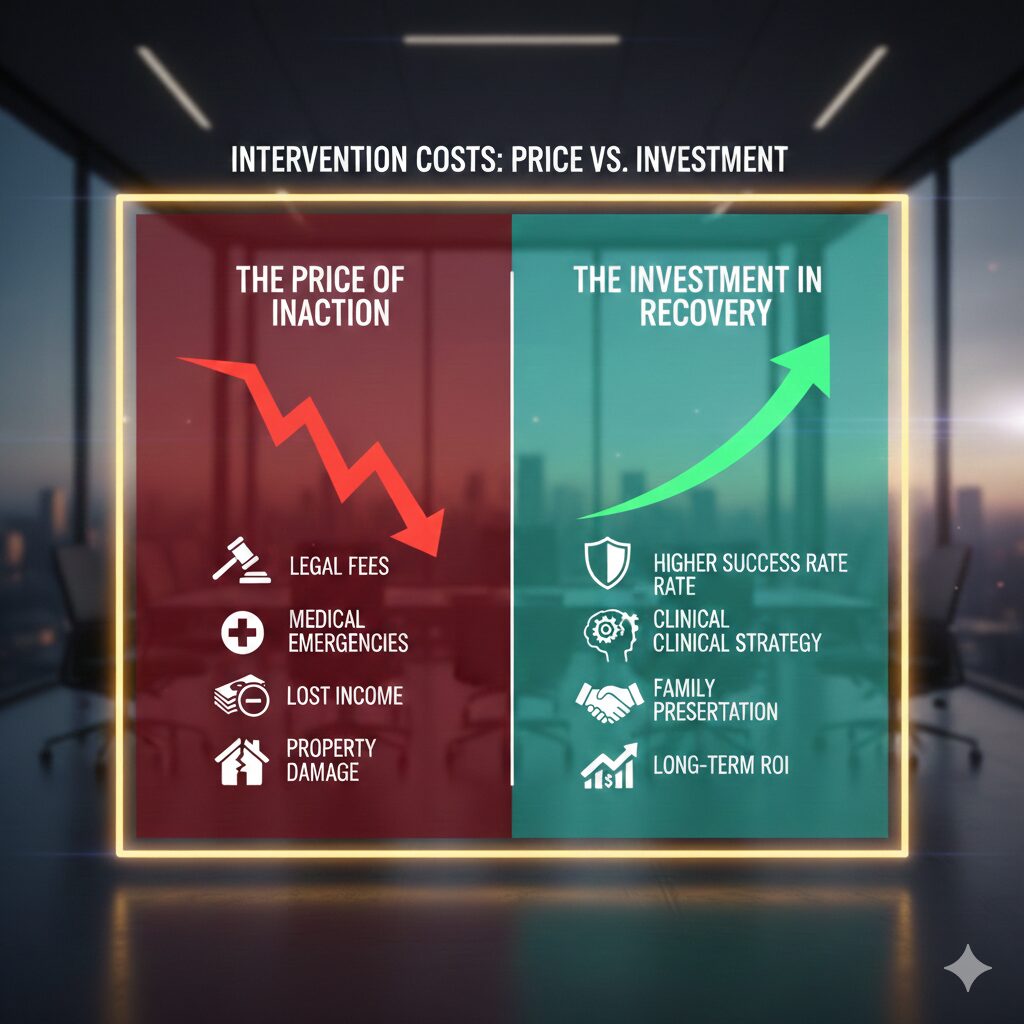
When a family reaches out to the specialists at Clear Path Intervention, one of the most immediate and practical questions is: “How much is this going to cost?” It is an entirely fair question. Families facing the storm of addiction are often already under immense financial strain weathering legal fees, mounting medical bills, and the […]