When the decision is finally made to help a loved one caught in the grips of addiction, the momentum is often high, but the “how-to” can feel overwhelmingly complex.
You know they need help, and you know you can't keep living like this, but where do you actually begin? The path from crisis to recovery requires a clear, actionable plan.
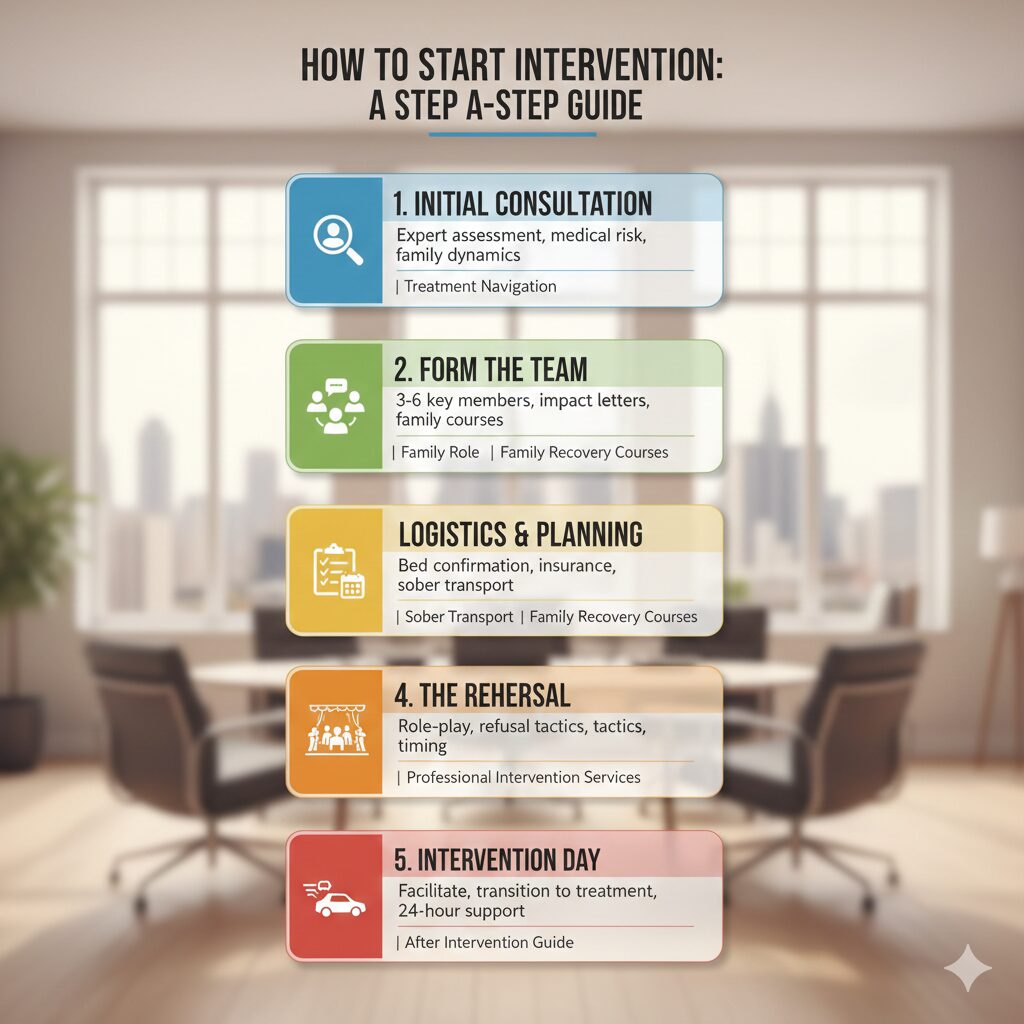
In 2026, the process for a professional intervention has become highly streamlined and sophisticated, combining clinical expertise with rapid-response logistics. At Clear Path Intervention, we believe that a successful outcome is the direct result of meticulous preparation and expert guidance. Here is the 5-step roadmap to starting a successful intervention and initiating a true healing journey.
The very first step isn't a confrontation; it's a confidential, compassionate conversation with our expert recovery team. In this initial phase, we conduct a thorough "case intake" to understand the unique intricacies of your situation. We identify:
This consultation is crucial for tailoring our professional intervention services to your family's specific needs.
An intervention is not a chaotic crowd; it is a precisely choreographed surgical team. We help you carefully select 3 to 6 individuals who hold significant emotional or practical influence over your loved one. During this critical stage, we work with each team member, coaching them on how to write powerful, heartfelt "Impact Letters." These letters focus on expressing love, outlining specific consequences, and setting firm boundaries, rather than dwelling on blame or past grievances. We also introduce the foundational concepts of our family recovery courses to begin equipping the family for their own healing journey.
Before we ever knock on a door, the entire "Yes" plan must be meticulously confirmed and ready to execute. This involves our specialized treatment navigation expertise:
The day before the planned intervention, we conduct a full, in-depth rehearsal with the entire intervention team. This session is vital for success. We anticipate every potential "refusal tactic", the excuses, the anger, the bargaining, or the emotional manipulation, and role-play appropriate responses. We practice the seating arrangement, the precise order of the Impact Letters, and the seamless transition from the intervention room to the waiting transport. This rehearsal empowers the family, removing the "fear of the unknown" and building confidence.
On the day of the intervention, our professional interventionist takes the lead. We expertly facilitate the meeting, manage the inevitable emotional peaks, and compassionately guide the individual toward the choice of treatment. Once they agree to seek help, our dedicated team springs into action, handling the immediate transition, ensuring they are safely and respectfully admitted to the designated care facility.
The first 24 to 72 hours after admission are often the most critical. This is when the individual is most vulnerable to "AMA" (leaving Against Medical Advice) due to withdrawal symptoms or second thoughts. Our team remains in constant contact with the family, guiding them through this delicate period, explaining precisely what happens after an intervention, and reinforcing that the boundaries established during the intervention must remain firm. We continue to support the family with resources and guidance, including access to our ongoing family recovery courses, to ensure sustained healing for everyone involved.
Starting an intervention is, without doubt, a daunting task. Yet, it remains the most direct and effective way to save a life spiraling out of control. By following a structured, clinical, step-by-step process with professional guidance, you replace chaos with a clear plan, and crippling fear with a tangible path forward.
The most crucial first step is simply reaching out. Contact Clear Path Intervention today at (850) 563-9776 for your initial, confidential consultation. Let's build the plan that brings your loved one back and restores peace to your family.
A confidential clinical consultation. Before any conversation with your loved one, an interventionist assesses the substance, the medical picture, and the family dynamics, then builds the plan around them.
Timelines vary with logistics and facility availability, but the process is designed to move quickly: assessment, team preparation, treatment placement, rehearsal, and intervention day are tightly coordinated.
One confidential conversation with a professional interventionist. No pressure, no obligation. We'll help you find the right next step for your family.