One of the most common questions we receive is: “Does the intervention have to happen where the treatment center is located?” The answer is a resounding no.
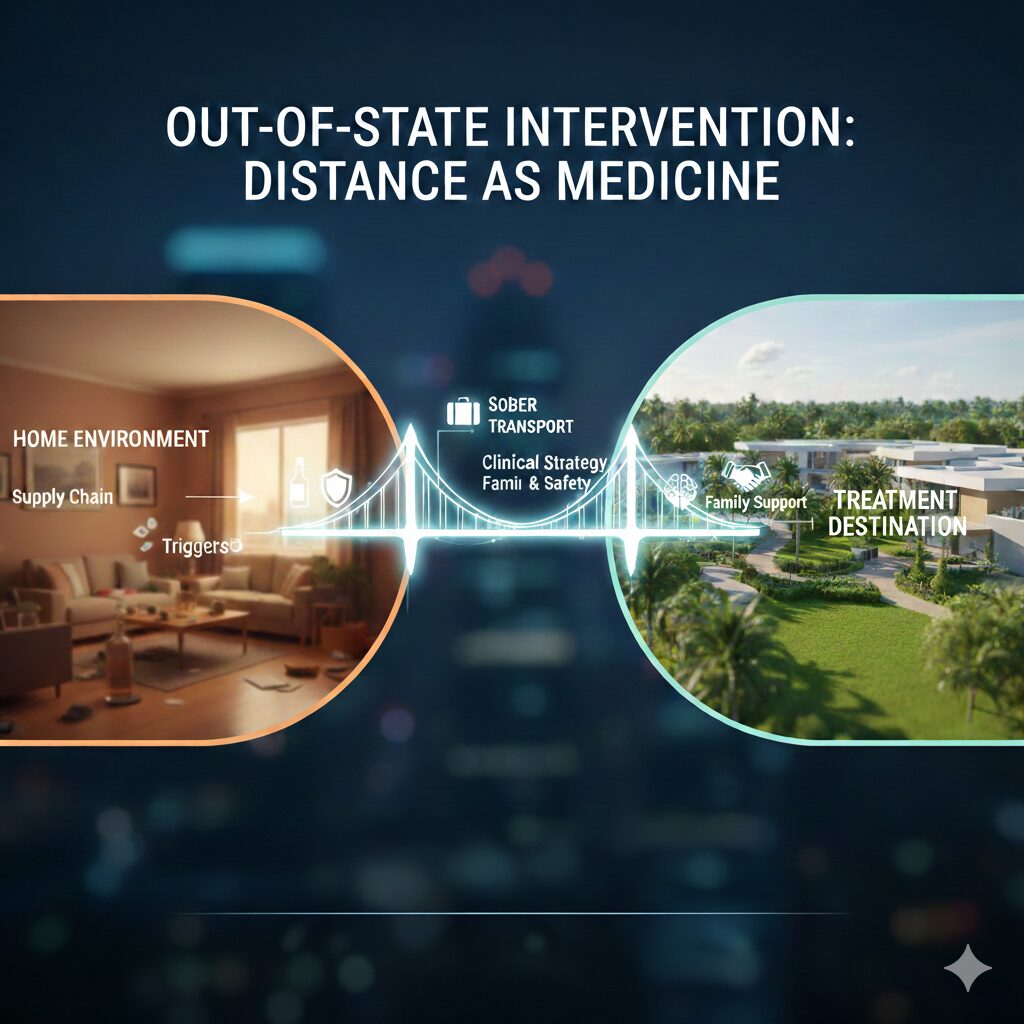
In fact, in 2026, some of the most successful recoveries begin with an out-of-state intervention.
At Clear Path Intervention, we specialize in the complex logistics of national interventions. Whether your family is in New York and the best facility is in California, or vice-versa, we manage the entire process to ensure that distance never becomes an obstacle to saving a life.
For many families, this comes as a relief. The best clinical match for a loved one, the program that fits their diagnosis, their age, and their history, is rarely the one closest to home. Planning around the right facility, rather than the nearest one, is often the single most important decision in the entire process.
While "running away" from problems is usually a bad idea, intentionally placing a loved one in a treatment center out-of-state can be a powerful clinical tool.
Why distance works:
The biggest fear for families considering an out-of-state option is the transition. "What if they change their mind at the airport?" This is where our sober transport services become indispensable.
We handle every detail:
Not all facilities are created equal. Our treatment navigation service isn't limited by geography. We look at the entire country to find the facility that matches the specific clinical needs of the individual, whether they need specialized dual-diagnosis care, executive-level amenities, or age-specific programming.
We handle the out-of-state insurance complexities and state-specific regulations, so the family can focus solely on supporting their loved one.
Just because the treatment is out-of-state doesn't mean the family is left out. Through our family recovery courses, we keep the family engaged via digital platforms and telehealth. We bridge the gap between the facility and the home, ensuring the family's role in addiction recovery remains central to the long-term plan.
Regular virtual family sessions, progress updates, and coaching calls mean that geography changes the mechanics of involvement, not the depth of it. Families often tell us they felt more connected to their loved one's recovery from two time zones away, with structure and guidance, than they ever did living in the same house without it.
Addiction doesn't respect state lines, and neither do we. If the best chance for your loved one's survival is 2,000 miles away, we have the experience, the licensing, and the logistical expertise to get them there safely.
Understanding what happens after an intervention, especially one that involves travel, is key to a family's peace of mind. We are with you every mile of the way.
Does your loved one need a fresh start in a new environment? Contact Clear Path Intervention today at (850) 563-9776 to discuss our national professional intervention services.
No. The intervention happens wherever your loved one is, and sober transport bridges the distance to the right facility, whether it is one state over or across the country.
That is exactly what sober transport is built for. A trained team member stays with the individual continuously from the yes until check-in, managing anxiety and cold feet along the way.
Yes. Family recovery courses, virtual sessions, and telehealth coaching keep the family engaged and central to the long-term plan regardless of geography.
One confidential conversation with a professional interventionist. No pressure, no obligation. We'll help you find the right next step for your family.