The state’s October numbers are the best Texas has posted in years. They are also a statewide average, and no family lives inside an average.

Fentanyl-related deaths in Texas fell 46 percent in two years, from 2,307 in 2023 to 1,254 in 2025, according to state health data released by Texas Health and Human Services in October 2026. Fewer Texans are dying. For a family watching one person use, though, the danger in a single counterfeit pill has not changed.
The figures come from the Texas Department of State Health Services and were published by the Texas Health and Human Services Commission on October 6, 2026, as the state marks Fentanyl Poisoning Awareness Month. The same release reports that Naloxone Texas, the statewide program HHSC contracts with the University of Texas at San Antonio to manage, distributed more than 222,000 units of naloxone in fiscal year 2026, and that the state’s One Pill Kills campaign has run since 2023.
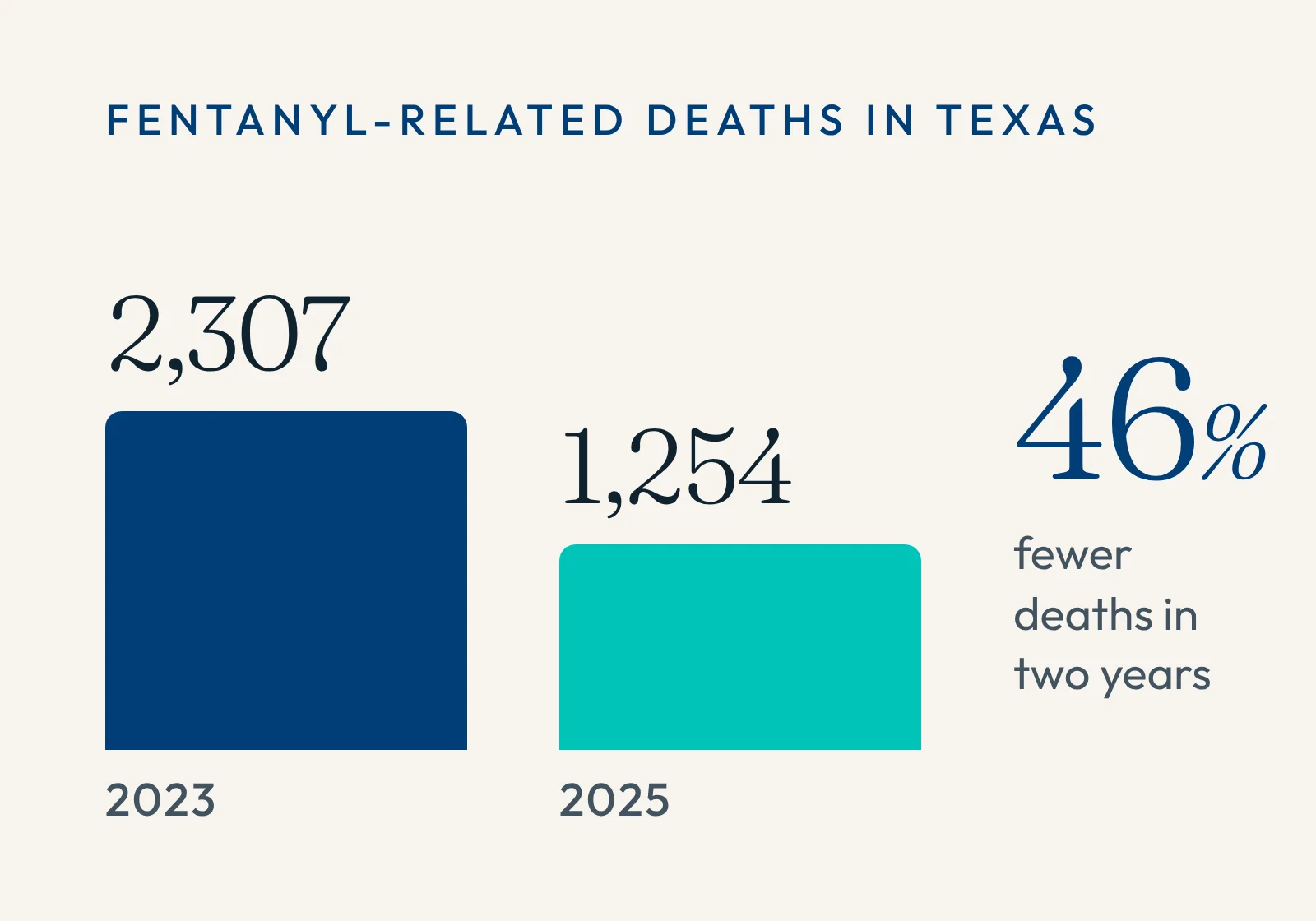
That is a real change, and the people behind it deserve credit. Fewer funerals is the whole point. It is also worth reading the number for what it is: a count across an entire state. It tells you the tide is going out. It cannot tell you where any one person is standing.
Families often call us after a headline like this one with a mix of relief and unease. The relief is reasonable. The unease is too, because the risk that matters most to them was never statewide. HHSC’s own release puts it plainly: fentanyl “can be found in counterfeit pills and other illicit drugs without a person’s knowledge.” A falling death count does not make the next pill more predictable.
“A statewide number going down is good news, and I am grateful for it,” says Brad Garraway, founder of Clear Path Intervention. “But no family calls us about a statewide number. They call about one person, and for that person the risk in a single pill is the same as it was.”
If you are unsure what a counterfeit pill looks like, our guide to what fentanyl looks like is a good place to start, and the fentanyl family guide covers what loved ones most need to know.
Naloxone Texas distributes free naloxone, the medication that reverses an opioid overdose, to organizations and to individuals, with ten regional distribution hubs and free online training. If someone in your home uses opioids or pills of unknown origin, keeping naloxone where the family can reach it is one of the simplest protective steps there is. It does not replace treatment. It buys the time to get there.
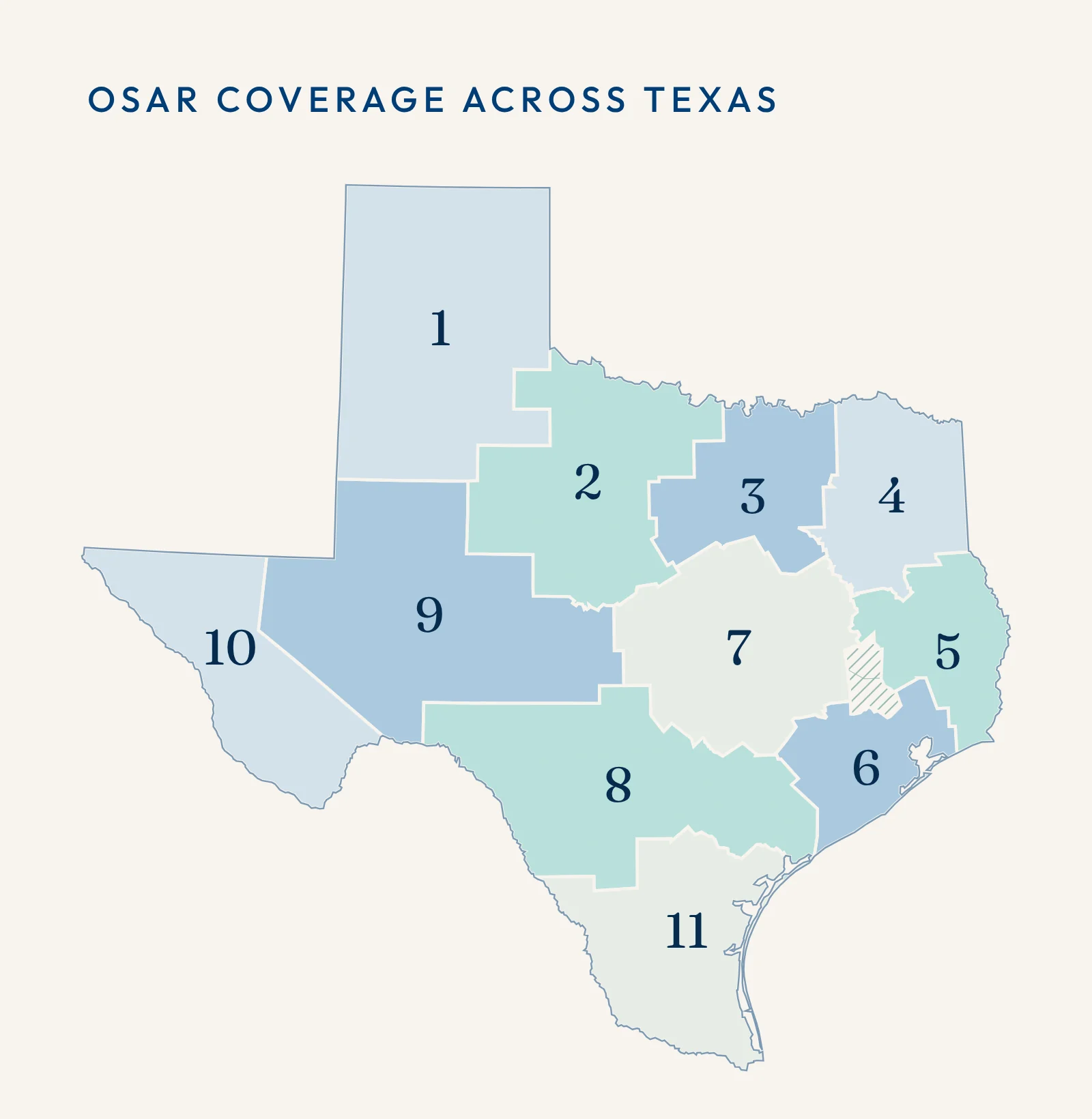
Texas funds Outreach, Screening, Assessment and Referral (OSAR) programs across all eleven of its health regions. HHSC describes them as a starting point for people who want help and are unsure where to begin, and the only requirement is living in Texas. You can reach the OSAR for your area through 211 Texas or at 877-541-7905. Dallas and Tarrant counties sit in Region 3, Harris County in Region 6, Travis County in Region 7, Bexar County in Region 8, and El Paso County in Region 10.
For comparing treatment programs in Texas or out of state, SAMHSA’s FindTreatment.gov lists licensed facilities and lets you filter by level of care, payment and services. Our treatment center checklist covers the questions to ask once you have a shortlist.
Texas is one of the states with a court process for substance use, set out in Chapter 462 of the Texas Health and Safety Code. In plain terms:
This is a legal tool for genuine emergencies, and a family should talk with an attorney before using it. Our overview of involuntary commitment laws compares states, and can we force a loved one into treatment walks through the harder questions.
“Court-ordered treatment exists for real emergencies, and sometimes it is the right call,” Garraway says. “Most of the families we work with start somewhere gentler: a prepared conversation, with a bed already waiting.”
A professional intervention sits between hoping things improve and going to court. The family plans a single, structured conversation, led by someone who has done it many times, and treatment is arranged before anyone says a word. Clear Path’s interventionists work with families across Texas, including in Dallas, Austin, San Antonio and El Paso.
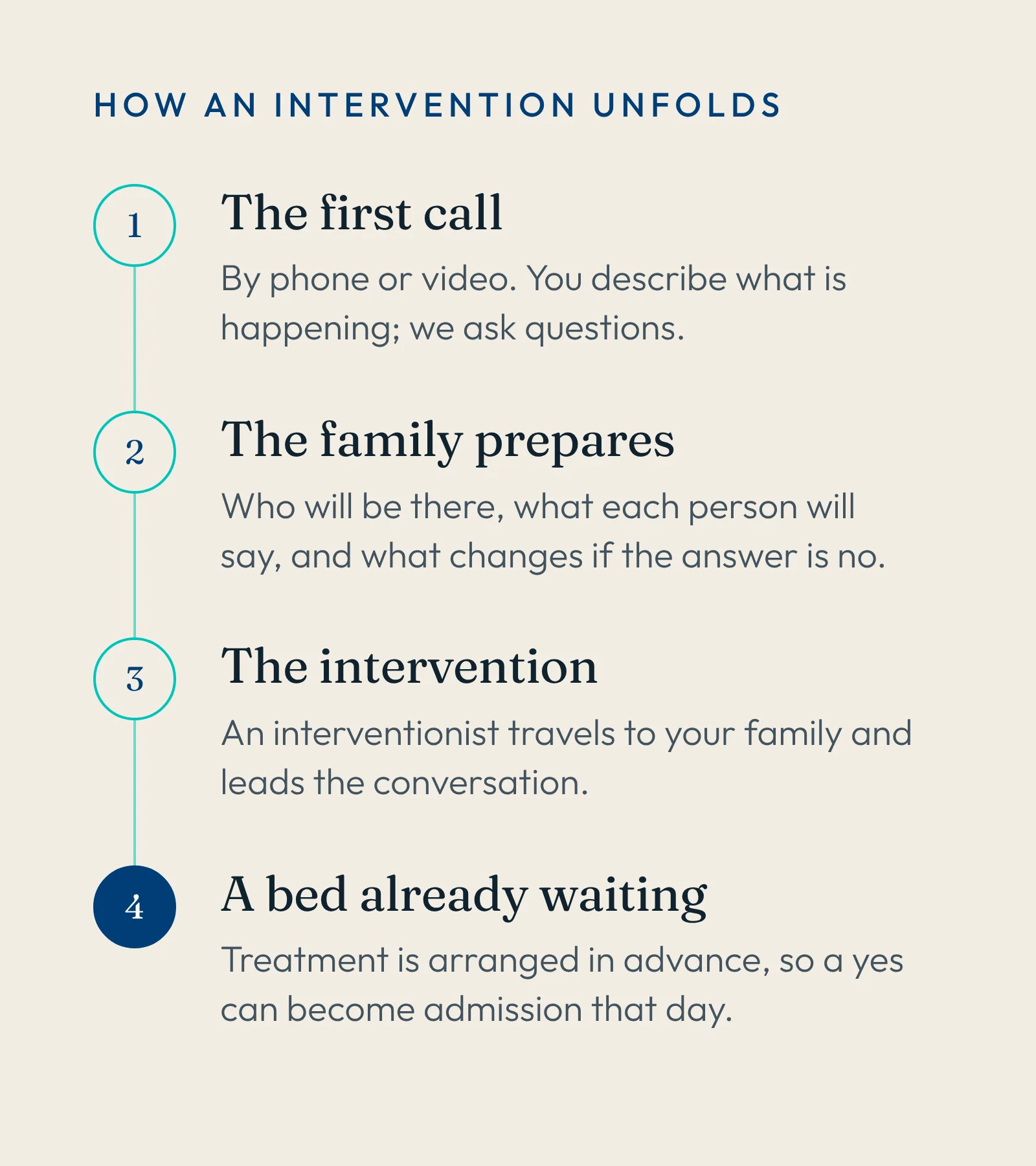
Planning starts by phone or video, so it can begin the same week a family calls. You can read what the day itself looks like in what happens on intervention day, and how quickly a loved one can travel in how fast they leave for treatment. When the program is in another city or state, sober transport gets them there with a professional beside them. With fentanyl in particular, our guide to intervention for fentanyl use explains what changes in the plan.
There is no single threshold, and waiting for one is how many families lose time. These are the moments that most often move a family from worry to a plan:
“Families often wait for proof that it is bad enough,” Garraway says. “With fentanyl, the proof can be the overdose itself. We would rather have the conversation while everyone is still at the table.” Our longer guide to the signs a loved one needs an intervention goes further, and why rock bottom is a dangerous myth explains why waiting rarely helps.
If someone is unresponsive or not breathing, call 911 and give naloxone if you have it. For a mental health or substance use crisis, call or text 988.
Yes. Texas Health and Human Services reported in October 2026 that fentanyl-related deaths fell 46 percent, from 2,307 in 2023 to 1,254 in 2025, based on Texas Department of State Health Services data.
Naloxone Texas, a statewide program HHSC contracts with the University of Texas at San Antonio to manage, provides free naloxone to individuals and organizations through its website and ten regional distribution hubs, along with free training.
Texas law allows an adult to file a sworn application for court-ordered treatment under Health and Safety Code Chapter 462, usually with a physician’s certificate. A court can order 30 to 90 days of treatment if the case is proved by clear and convincing evidence. Talk with an attorney first; many families start with a planned intervention instead.
Yes. Clear Path works with families in all 50 states, including across Texas. Planning begins by phone or video, and an interventionist travels to the family for the intervention itself. Call (850) 563-9776.
One confidential conversation with a professional interventionist. No pressure, no obligation. We'll help you find the right next step for your family in Texas.