Not the television version. Not the worst-case scenario you have been imagining. The real thing: the conversations, dynamics, and decisions that unfold when a family comes together.
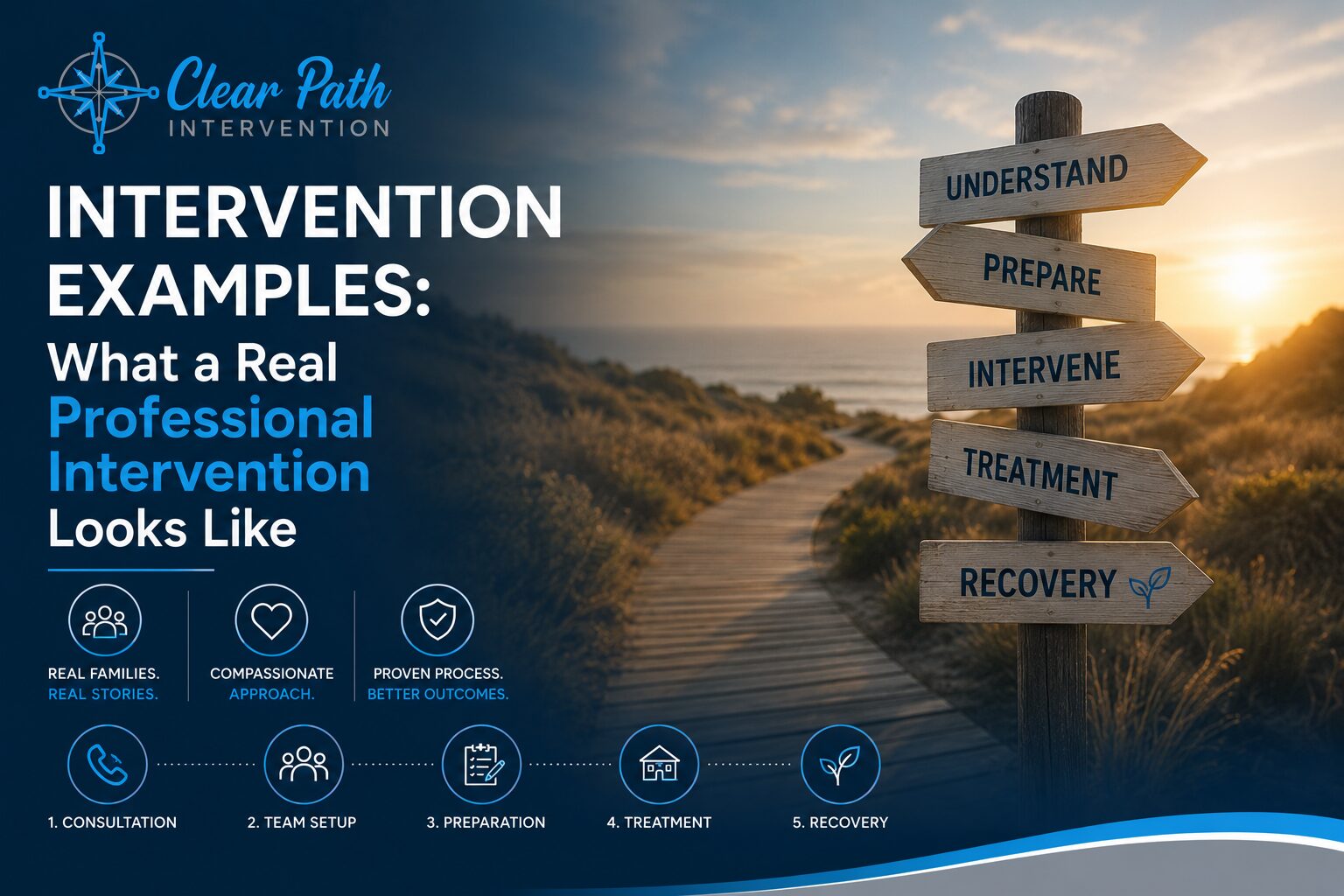
One of the most useful things a family can do before beginning the intervention process is to understand what it actually looks like in practice. Not the television version. Not the worst-case scenario they have been imagining. The real thing: the conversations, the dynamics, the decisions that unfold when a family comes together around a loved one who is struggling.
The examples below are composite scenarios drawn from common patterns in professional intervention work. Names and details are entirely fictional. What they illustrate is real: how different families approach the process, what challenges arise, and what the outcomes tend to look like when the work is done with professional guidance.
Abstract information only goes so far. When a family is trying to decide whether to move forward with an intervention, they often need to be able to picture what it looks like for a family like theirs. Examples make the process concrete. They also show something that statistics cannot: that interventions are not one-size-fits-all. The approach shifts based on the person, the addiction, the relationships involved, and the goals of the family. The professional interventionist's role is precisely to read those variables and adapt accordingly.
A family in the southeast had been watching their 34-year-old son deteriorate for three years. What started as prescription pain medication after a back injury had shifted, over time, into something far more serious. He had lost his job. He had borrowed money from everyone in the family and stopped paying it back. His wife had separated from him.
The family had tried to talk to him dozens of times. Every conversation ended the same way: he minimized what was happening, accused them of exaggerating, or became angry and shut the conversation down.
They contacted a professional interventionist after his father found him unresponsive in the backyard. He had survived, but the event made it impossible to maintain the fiction that things might still work themselves out.
The intervention team included his parents, his estranged wife, his older sister, and a close friend. The interventionist coached them over four days. The treatment facility, a residential program with medical detox, was confirmed before the meeting.
Each person read their statement. His wife went last. When she finished, he agreed to go. He left for the treatment facility that afternoon.
A family on the west coast had been managing their mother's drinking for years. She was a functioning alcoholic, held a job, maintained appearances, but the family knew. Her adult children had grown up in a household organized around her drinking.
The interventionist used a non-confrontational approach suited to this family's dynamic. The three adult children participated. Her sister, who lived nearby and had never directly addressed the issue, agreed to take part after the interventionist helped her understand that her silence had been a form of enabling.
The intervention was framed not as a crisis confrontation but as a family conversation. She arrived tense but not shocked. She cried through most of the statements. She did not deny the drinking. She said she had known it was a problem for years but did not know how to stop. She accepted the treatment option that same day.
Her recovery included significant family work. The interventionist connected the family with family recovery resources to help them understand their own patterns and how to support her without recreating the enabling dynamic.
A couple in the midwest were dealing with something their friends and neighbors would never have guessed. Their 26-year-old daughter, successful by every external measure, had developed a serious methamphetamine addiction over two years. She worked in finance, kept a clean apartment, and maintained a convincing surface life.
She was resistant to the idea of having a problem. Her identity was built around competence and control. The interventionist advised a small team: just the parents and one close friend. The statements were written carefully, avoiding any language that might feel like a character attack.
She did try to leave. She stood up twice. Both times, the interventionist quietly asked her to hear one more person before she went. She sat back down. By the time the last statement was read, she was crying in a way that suggested the surface had finally cracked.
She asked for 24 hours to think about it. She called back that evening and agreed to go. She entered a residential program the following morning.
Her case illustrates something important: interventions do not require dramatic collapse. They work for people who look like they have it together. Read more about drug addiction interventions and how approach varies by situation.
Three different families. Three different addictions. Three different approaches. But the same underlying structure: preparation, the right people, specific and compassionate statements, and a treatment option ready to go.
In each case, the presence of a professional interventionist kept the conversation moving toward its purpose when the emotional weight of the situation would otherwise have pulled everyone off course.
SAMHSA's National Helpline is available 24/7 for families navigating addiction. The team at Clear Path Intervention offers free consultations and works with families across all 50 states to assess whether a professional intervention is the right next step. Call (850) 563-9776 to talk through your family's situation confidentially.
The scenarios are composites drawn from common patterns in professional intervention work; names and details are entirely fictional. What they illustrate is real: how preparation, the right participants, and a ready treatment plan shape outcomes.
It happens, and an experienced interventionist is prepared for it. As in the third example, a calm request to hear one more person before leaving is often enough. The interventionist's steady presence keeps the room from tipping into crisis.
One confidential conversation with a professional interventionist. No pressure, no obligation. We'll help you find the right next step for your family.