Knoxville and Knox County are on track for one of their lowest overdose years in almost a decade. That is hard-won progress. It arrives alongside a new synthetic opioid that local medical examiners have now linked to dozens of deaths, and it changes what a careful family should be watching for.
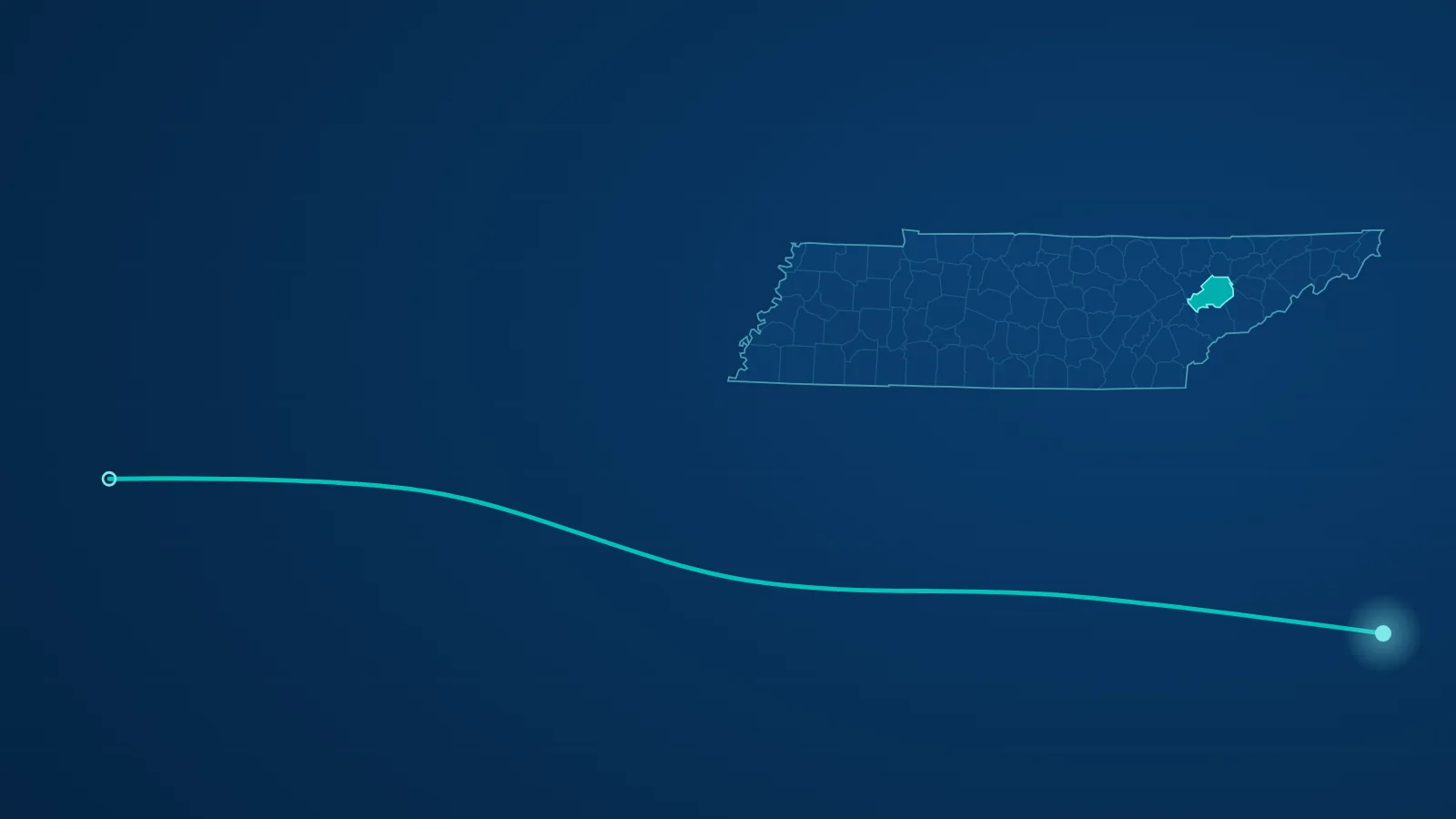
Knox County recorded 194 suspected overdose deaths in 2026 through October 28, down from 223 at the same point in 2025, according to the Knox County District Attorney's dashboard reported by WATE. The county peaked at 511 deaths in 2022. A new synthetic opioid, cychlorphine, has now been linked to 69 fatal overdoses there.
On October 29, 2026, WATE in Knoxville reported the latest figures from the Knox County District Attorney's suspected overdose dashboard. Two weeks earlier, WVLT reported that the Knox County Regional Forensic Center counted 16 percent fewer drug-related deaths through June 2026 than in the first half of 2025. Together, the reports point the same direction.
Cychlorphine is a novel synthetic opioid. The Knox County Regional Forensic Center announced it in early 2026 after finding it in overdose cases that began in late 2025, and as of October 29 it had tied the drug to 69 fatal cases. New cases slowed over the summer, WATE reported, but some experts believe it is about 10 times stronger than fentanyl, and in the Forensic Center's 2025 drug-related death report, Chief Medical Examiner Dr. Darinka Mileusnic-Polchan wrote that naloxone is not as effective against it.
That does not mean naloxone is useless. It means a family should never treat a dose of Narcan as the end of an emergency. Call 911 first, give naloxone, and stay with the person, because more than one dose may be needed and breathing can slow again after it wears off.
The same report lists the benzodiazepine bromazolam and mitragynine, the main compound in kratom, among the drugs found most often in local deaths. In 53 percent of Knox County drug deaths in 2025, more than one drug contributed.
“Falling numbers are worth celebrating. They are not a reason to relax at home. When the supply changes, the people most at risk are the ones who think they know what they are taking. If your loved one is still using in East Tennessee, the time to make a plan is now, not after the next close call.”
Brad Garraway, NCIP, NCRC, Founder, Clear Path Intervention
Part of the story is access. WVLT reported that the McNabb Center expanded its residential and detox capacity from 38 to 72 beds, that residential wait times have dropped significantly, and that hospitals including UT Medical Center can now start patients on medication in the emergency room and transfer them to treatment the same day. Thousands of Narcan kits have also been distributed across the county.
For families, that changes the math. A yes on intervention day is only as useful as the bed waiting behind it, and in Knoxville that bed is easier to find than it was.
One
Keep naloxone, and know its limits. Store it at home and in the car. In an overdose, call 911 before or right after giving it, and stay until help arrives.
Two
Assume the supply is not what it claims. Pills and powders are often mixed with fentanyl, nitazenes, or sedatives. A loved one may not know what they are taking.
Three
Treat a non-fatal overdose as the signal. Surviving one does not lower the risk of the next. It is often the clearest moment a family will get.
Four
Stop waiting for them to be ready. Many people who need help resist it. Our article on why rock bottom is a dangerous myth explains why waiting usually makes things harder.
A professionally led intervention is built for a person who is not asking for help. The family prepares together, a treatment placement is arranged in advance, and an experienced interventionist guides the conversation and what comes after it. Read how the process works in what is a professional intervention, or see our signs a loved one needs an intervention.
“When a Tennessee family calls, the first conversation is about what is happening right now and who is involved. Much of the planning happens by phone or video, so a family in Knoxville can get started without waiting on travel.”
Chip Burson, Director of Operations, Clear Path Intervention
194 suspected overdose deaths through October 28, 2026, per the Knox County District Attorney's dashboard as reported by WATE. That is about 30 fewer than at the same point in 2025. Counts can change as investigations close.
A novel synthetic opioid first announced by the Knox County Regional Forensic Center in early 2026. The Regional Forensic Center has linked it to 69 fatal overdose cases as of October 29, 2026, and the county medical examiner has said naloxone is not as effective against it.
Yes, give it. Naloxone reverses many opioid overdoses. With stronger synthetic opioids, more than one dose may be needed, so always call 911 and stay with the person.
Call 911 in an emergency. Call or text 988 for the Suicide and Crisis Lifeline. To talk with an interventionist about a loved one, call Clear Path Intervention at (850) 563-9776.
Clear Path Intervention works with families in Knoxville, Nashville, Chattanooga, Murfreesboro, Memphis, and every community in between. Learn more about our professional interventionists in Tennessee, or call (850) 563-9776 for a confidential conversation.
If someone is in immediate danger, call 911.
This article is for education and is not medical advice. Clear Path Intervention does not accept compensation from treatment centers. See our editorial policy.
One confidential conversation with a professional interventionist. No pressure, no obligation. We'll help you find the right next step for your family in Tennessee.