There is a specific kind of exhaustion that settles into a family after the third, fifth, or tenth trip to treatment. The initial hope of “this time will be different” has been replaced by a cynical, protective numbness.
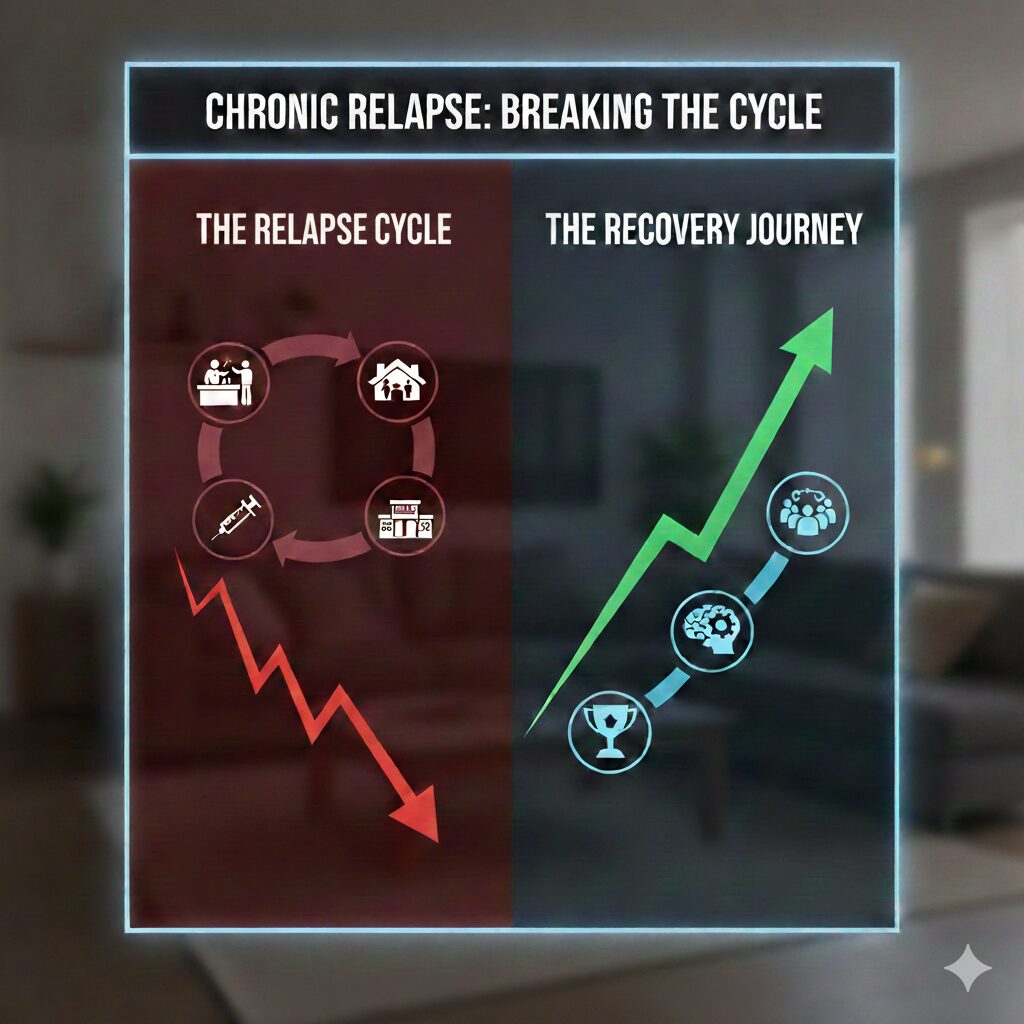
When a loved one returns home only to relapse within weeks or even days, the family often begins to believe that recovery is simply impossible for them. At Clear Path Intervention, we believe that chronic relapse is not a sign of a "lost cause"; it is a sign of an incomplete strategy. Our NCIP-certified recovery coaches specialize in stopping the revolving door of treatment and building a foundation that actually holds.
If this is your family, you are not imagining the pattern, and you did not cause it. What families in this position need is not another emotional plea or another identical 30-day stay. They need a fundamentally different plan, one that treats the transition home, the boundaries around it, and the months that follow as seriously as the treatment episode itself.
Most treatment centers are excellent at providing a "clinical bubble", a safe, drug-free environment for 30 days. However, the failure rarely happens inside the facility; it happens at the point of transition.
Chronic relapsers often fail because:
The intervention is the start, and treatment is the education, but the aftercare is the actual recovery. For the chronic relapser, the period immediately following discharge is the highest risk.
This is why we emphasize safe sober transport services and professional sober coaching. We don't just drop a client at their front door; we help them navigate the first 90 days, the "Critical Window" where the brain is still re-calibrating its dopamine levels and the temptation to return to old patterns is strongest.
Some individuals become "professional patients." They know the language of recovery, they can "talk the talk" in meetings, and they know exactly what to say to get their family to lower their guard.
An intervention for a chronic relapser requires a different clinical tone. It's not about explaining that they have a problem (they already know they do); it's about removing the safety net that allows the cycle to continue. Understanding the family's role in addiction recovery means the family must stop funding the relapse cycle under the guise of "helping."
In 2026, the most successful models for chronic relapse move away from "episodes of care" toward Longitudinal Recovery Management. As a professional interventionist, we help families build a 12-to-18-month roadmap.
This roadmap includes:
If your loved one has "failed" out of multiple programs, it doesn't mean they can't recover; it means the system they were in wasn't robust enough for their specific needs. By moving past the "30-day fix" mentality and embracing a long-term, supervised strategy, you can finally break the cycle.
Knowing what happens after an intervention is especially vital for families of chronic relapsers. You need to know that there is a plan for "Day 31" and beyond.
The revolving door stops here. Contact Clear Path Intervention today at (850) 563-9776 to discuss a specialized strategy for your loved one's final, successful transition into lasting recovery.
No. Relapse usually means the plan around treatment was incomplete, especially aftercare, boundaries, and the home environment. A longer, more structured strategy changes the outcome.
The focus shifts from convincing someone they have a problem to removing the safety net that sustains the cycle. Boundaries, accountability, and a 12-to-18-month roadmap take center stage.
Quickly. The period right after a relapse is high-risk, and a professional interventionist can help the family respond with structure instead of panic. Call or text (850) 563-9776.
One confidential conversation with a professional interventionist. No pressure, no obligation. We'll help you find the right next step for your family.